
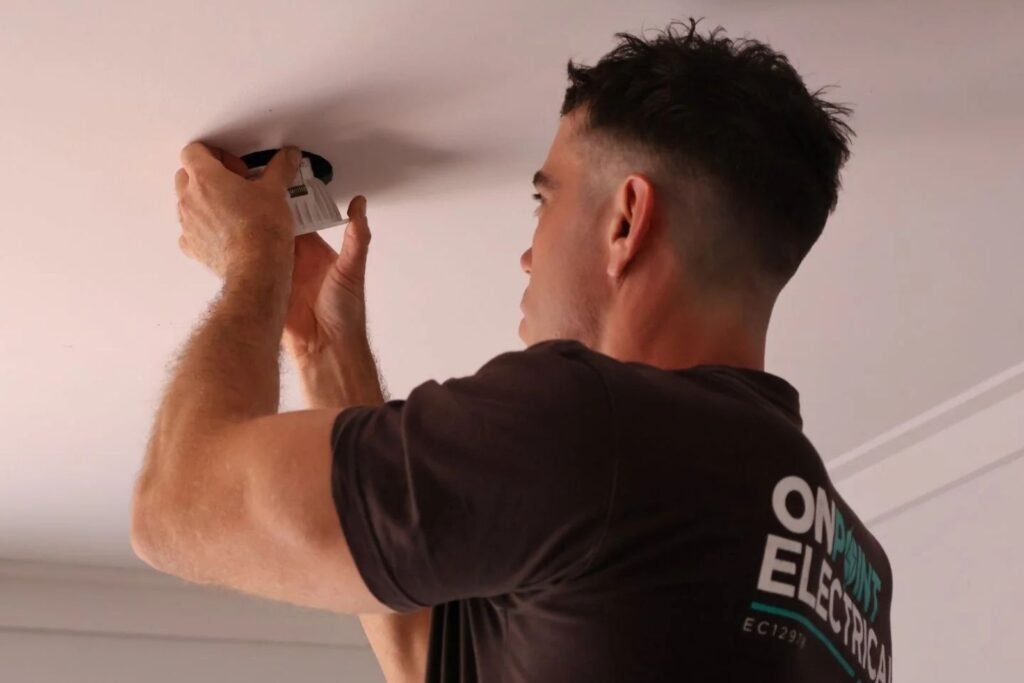
Smoke alarm laws in WA catch a lot of Perth homeowners and landlords by surprise, usually at the worst possible moment – just before a sale settles or a new tenancy begins. The rules are clear once you know them, but the penalties for getting them wrong are real.
This 2026 guide explains the smoke alarm laws that apply in WA, what they mean for homeowners and landlords in Perth, and exactly what you need to have installed to be compliant.
Every WA home should have working smoke alarms, but the strict legal requirements are triggered at specific points in a property’s life. Under WA law, compliant mains-powered smoke alarms are required when a home is:
Newly built or has had a building permit issued (since 1 July 1997)
In other words, if you are selling your Perth home, or renting one out, you must have compliant smoke alarms installed before settlement or before the tenancy begins. If you simply live in your own home and are not selling or leasing, the law is less strict, but having compliant alarms is still strongly recommended for your family’s safety.
A compliant smoke alarm in Western Australia must meet all of the following:
Photoelectric: it must be a photoelectric alarm complying with Australian Standard AS 3786:2014. Older ionisation alarms no longer meet the requirement for homes being sold or leased.
Mains-powered: it must be hardwired to 240V mains power, installed by a licensed electrical contractor. A sealed 10-year lithium battery alarm is only allowed where mains wiring is genuinely impractical, such as a home with concrete ceilings and no wiring cavity.
Correctly placed: in hallways or corridors associated with bedrooms, and on every storey, including levels that have no bedrooms.
One important point that catches people out: removable 9-volt battery alarms are not permitted for homes being sold or leased. If your alarms take a replaceable battery, they almost certainly need upgrading.
If your Perth home was built, or received its building permit, on or after 1 May 2015, your smoke alarms must be interconnected. Interconnected means that when one alarm detects smoke, every alarm in the home sounds at once – so a fire starting in the kitchen also wakes someone sleeping in a back bedroom. This can be done with hardwired connections or with modern wireless interconnection.Homes built before 1 May 2015 are not legally required to have interconnected alarms, though it is strongly recommended, particularly in larger or multi-storey homes where a single alarm might not be heard from every room.
If you own a rental property in Perth, the obligation sits with you as the landlord, not the tenant. Before each tenancy begins, you must ensure compliant photoelectric, mains-powered smoke alarms are installed and in working order.
This is not a set-and-forget task: you have an ongoing duty to keep the alarms working throughout the tenancy, including replacing a failed alarm or a depleted backup battery promptly.
The same rules apply to short-term rental accommodation. For property managers handling multiple Perth properties, it is worth scheduling an annual smoke alarm check by a licensed electrician across your portfolio, so nothing lapses between tenancies.
The Department of Fire and Emergency Services (DFES) recommends photoelectric alarms because they are much better at detecting smouldering fires – the slow, smoke-heavy fires that are most common in homes, often started by electrical faults or unattended cooking.
Older ionisation alarms respond faster to flaming fires but are slower to pick up the smouldering fires that cause most home fire deaths. This is the reasoning behind the shift to photoelectric alarms in the WA requirements.
Smoke alarms themselves are inexpensive, typically ranging from around $20 for a basic unit to $90 or more for a wireless interconnected alarm. The main cost is the licensed installation, particularly if new wiring is needed to hardwire alarms in an older home, or if you are adding interconnection.
When we install smoke alarms for a Perth home, we assess how many alarms are required and where, confirm whether interconnection applies to your property, install compliant photoelectric alarms to the correct standard, test everything, and make sure your home meets its obligations before a sale or tenancy. If your switchboard or wiring needs attention at the same time, we can handle that in the one visit.
Yes. In WA, compliant photoelectric, mains-powered smoke alarms less than 10 years old must be installed before you transfer ownership of a home. This has applied to properties sold since 1 October 2009. The seller is responsible for ensuring they are in place before settlement.
In most cases, yes. Homes being sold or leased must have mains-powered (hardwired) alarms, installed by a licensed electrician. A sealed 10-year battery alarm is only permitted where running wiring is genuinely impractical, such as a home with concrete ceilings.
Only if your home was built or permitted on or after 1 May 2015. For those homes, all alarms must sound together when one is triggered. Older homes are not legally required to have interconnection, though it is strongly recommended.
The landlord. In WA, landlords must ensure compliant smoke alarms are installed and working at the start of each tenancy, and must maintain them throughout, including replacing failed alarms or backup batteries promptly.
Whether you are preparing to sell, getting a rental ready for a new tenant, or simply want your family properly protected, On Point Electrical Perth installs compliant photoelectric smoke alarms across Perth and the City of Stirling. Our licensed electricians make sure your home meets its obligations, and issue the right documentation. Call 0427 440 393 or book online to arrange your smoke alarm installation or compliance check today.
Reliable and professional electricians offering quality residential and commercial electrical services across Perth.
Copyright © 2026 On Point Electrical Perth – All Rights Reserved.
Designed by: AEOZO